-
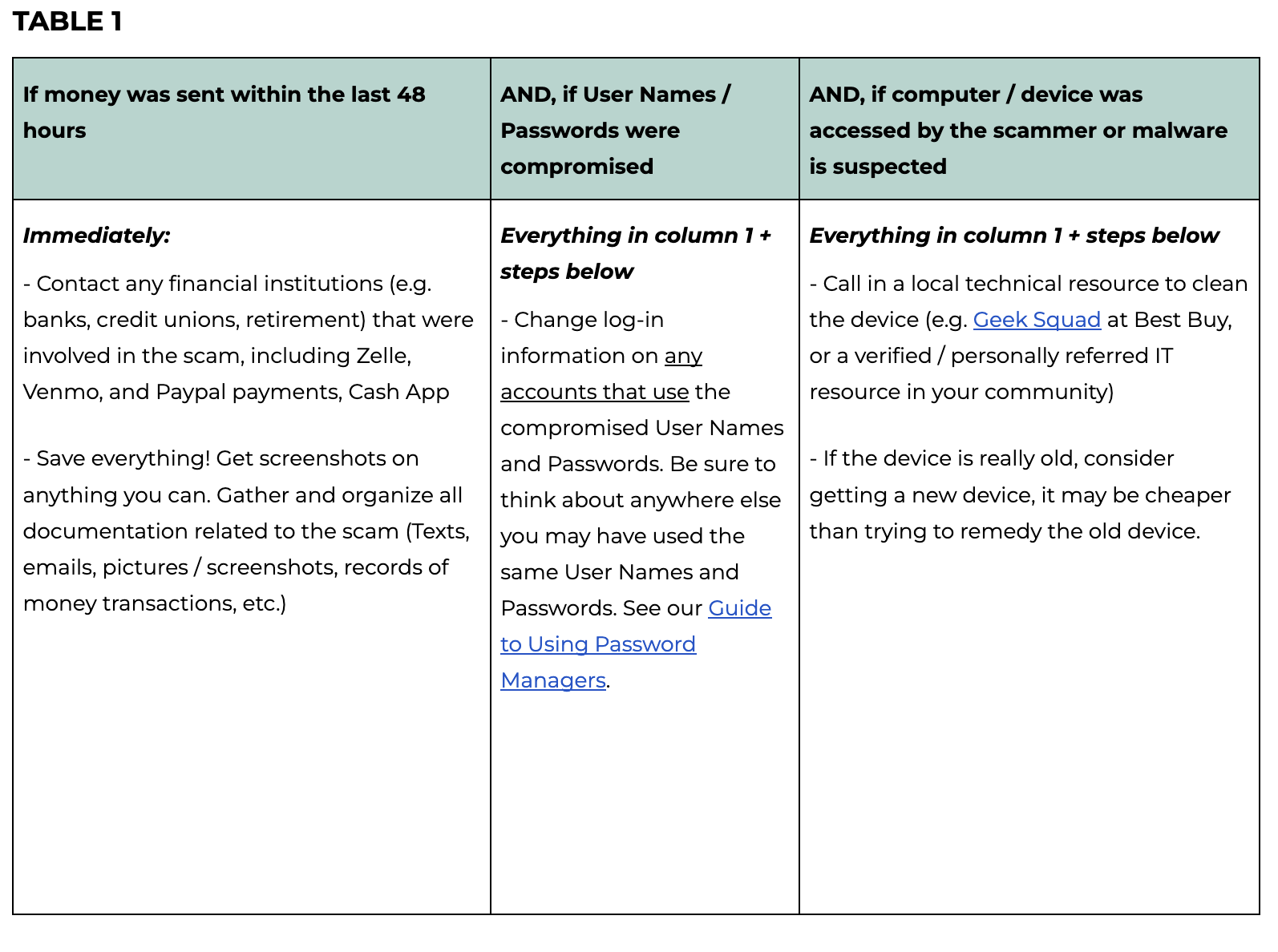
Acting IMMEDIATELY is critical to stop the financial hemorrhaging, and if hoping to recover any money
-
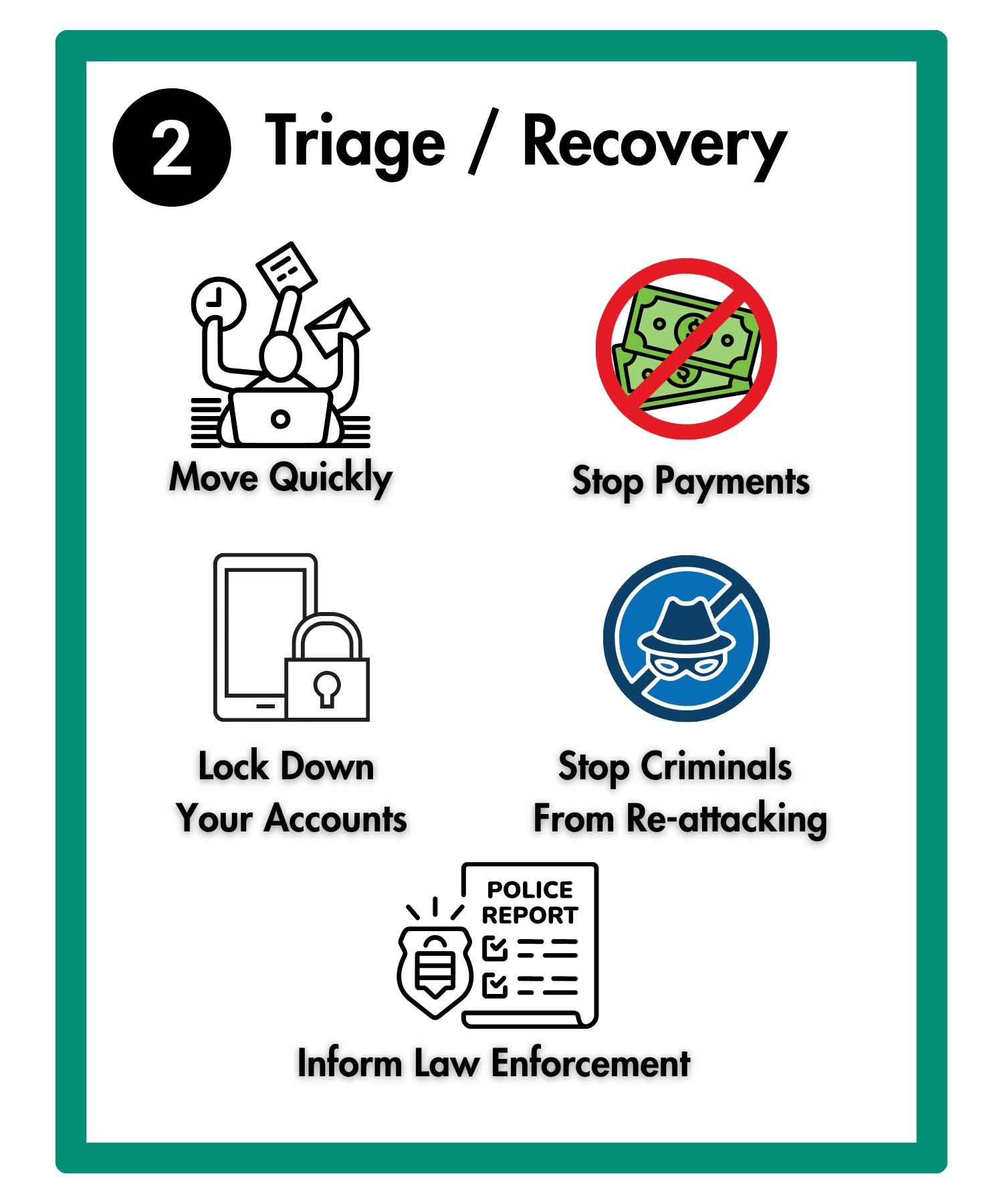
Urge efforts to stop payments ASAP.
Prevent any future victimization — social security, bank accounts, etc.
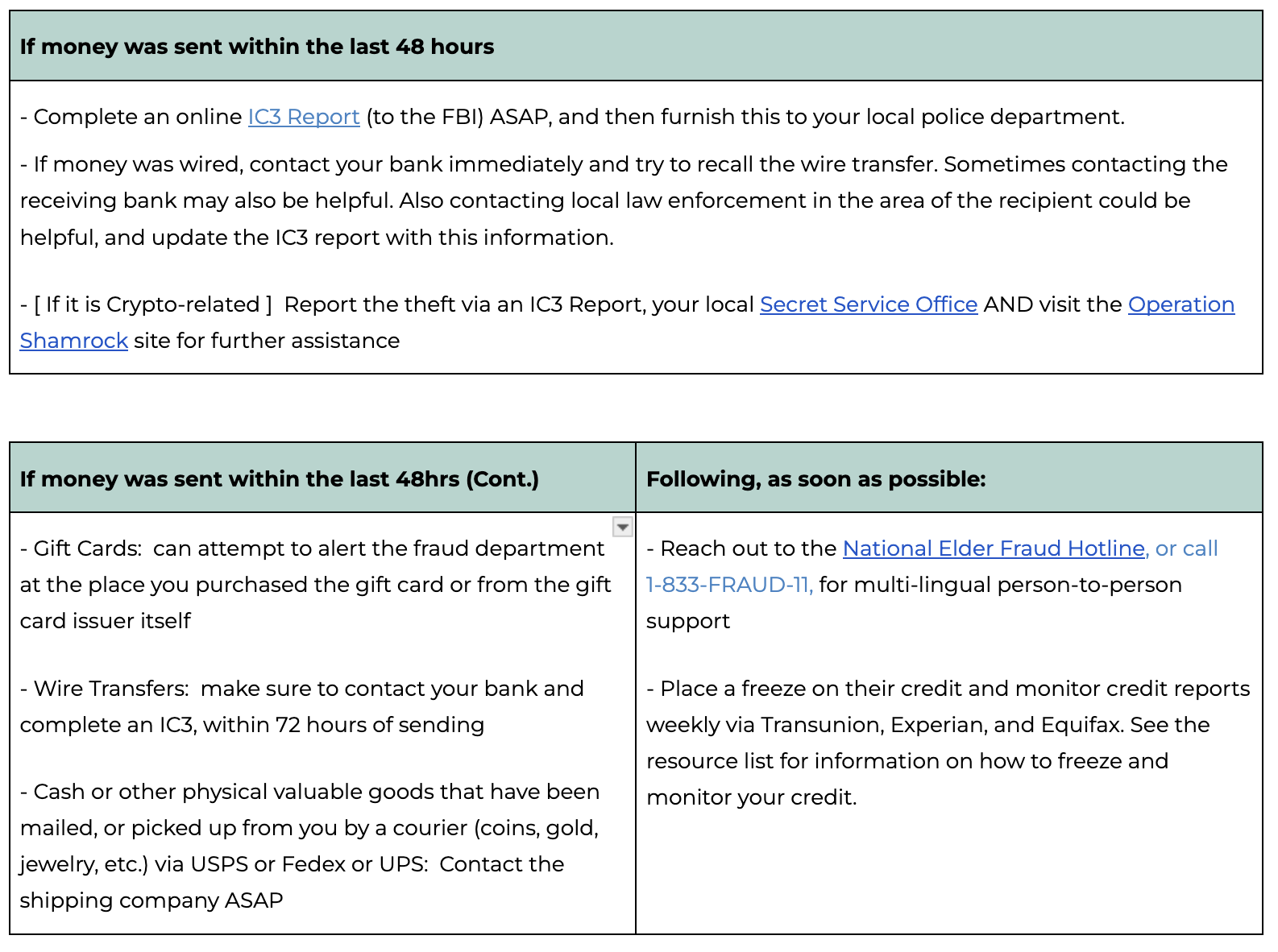
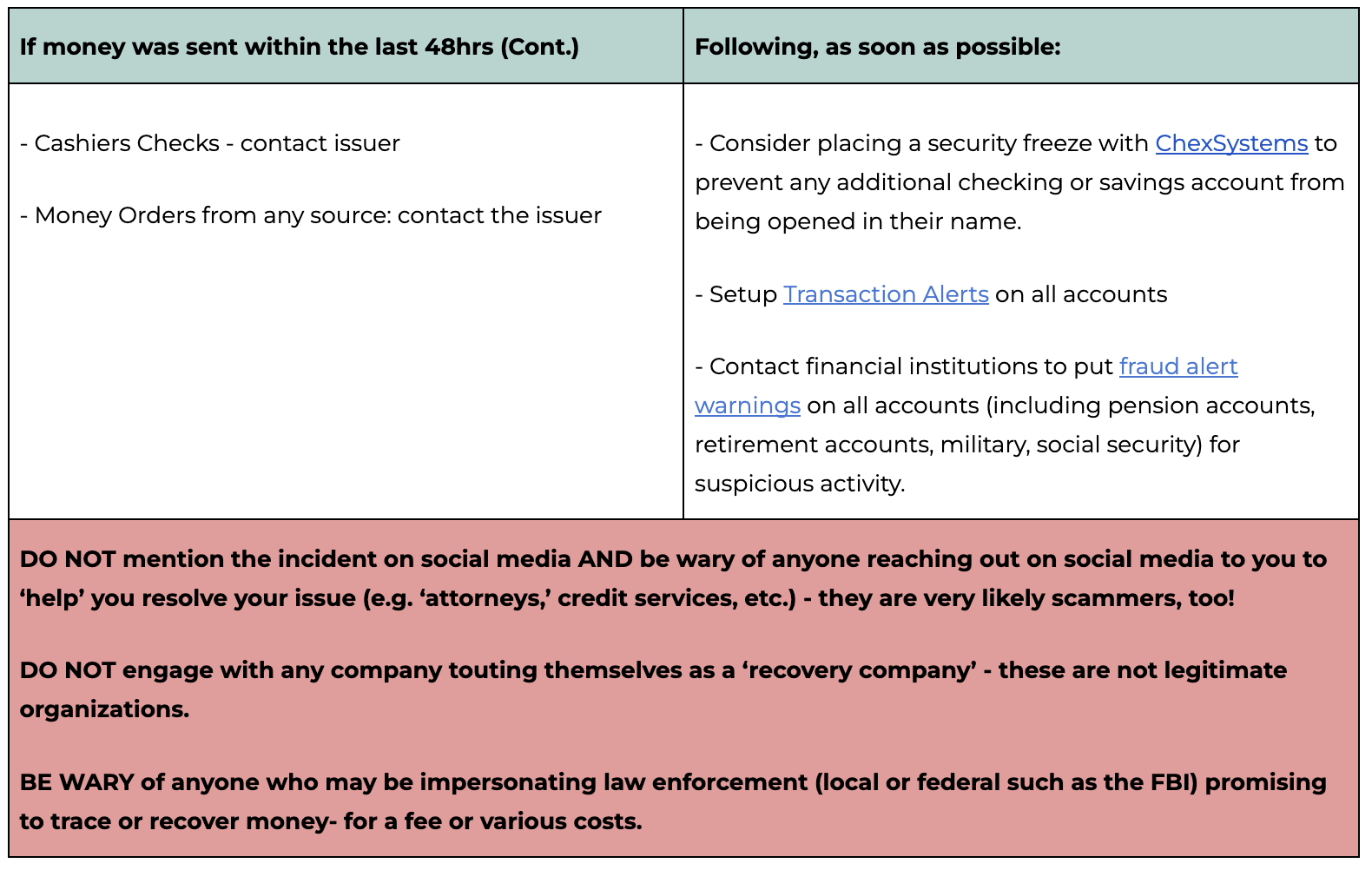
Refer to Table 1
-
Place a freeze on credit and monitor credit reports weekly
Setup Transaction Alerts on all accounts
Contact financial intitutions to put fraud alert warnings on all accounts
-
Stop ALL contact if the person victimized is willing.
When a loved one resists family warnings and sides with the scammer, the initial focus should be on cutting off the financial supply. Addressing the communication with the scammer should be the subsequent step.
If your loved one cannot be convinced and you need to step in, more forceable actions are required. See Prevention Section 1C Additional Measures for Severe Situations.
-
File the IC3 (FBI Report) and then contact your local law enforcement agency, providing them a copy of the report
Triage
Once it’s clear that there has been an act of financial violence (scam has occurred), there are immediate action steps that need to be taken:
Key Points:
Almost all financial violence is a form of imposter fraud. Imposter fraud is when a criminal pretends to be someone else in order to steal your money or information.
Acting IMMEDIATELY is critical to stop the financial hemorrhaging, and if hoping to recover any money. Despite trying to convince them, people victimized may believe that putting a “little more money” could help them get their money back or get what was promised. This is called “sunk cost fallacy.”
File the IC3 (FBI complaint or report) and then contact your local law enforcement agency, providing them a copy of the report.
If your loved one has been the victim of a financial fraud, they will also be at risk of it happening again... and again. Triage and intervention tools may help to mitigate that risk of revictimization.
This guide covers many types of Imposter Scams such as:
Romance Scams, including those that are investment fraud related (incl Crypto)
Celebrity endorsement, investment or romance scams
Tech Support Scams (anti-virus, computer repair, etc.)
Company / Government Agency Imposter Fraud (Banks, Financial Advisor, IRS, Post Office, Amazon, Delivery Services, Charity Fraud, Disaster Relief)
Fraud Recovery Scams: scammers impersonate law enforcement or attorneys to promise to recover your funds.